
Species is a cost-and-lifespan decision
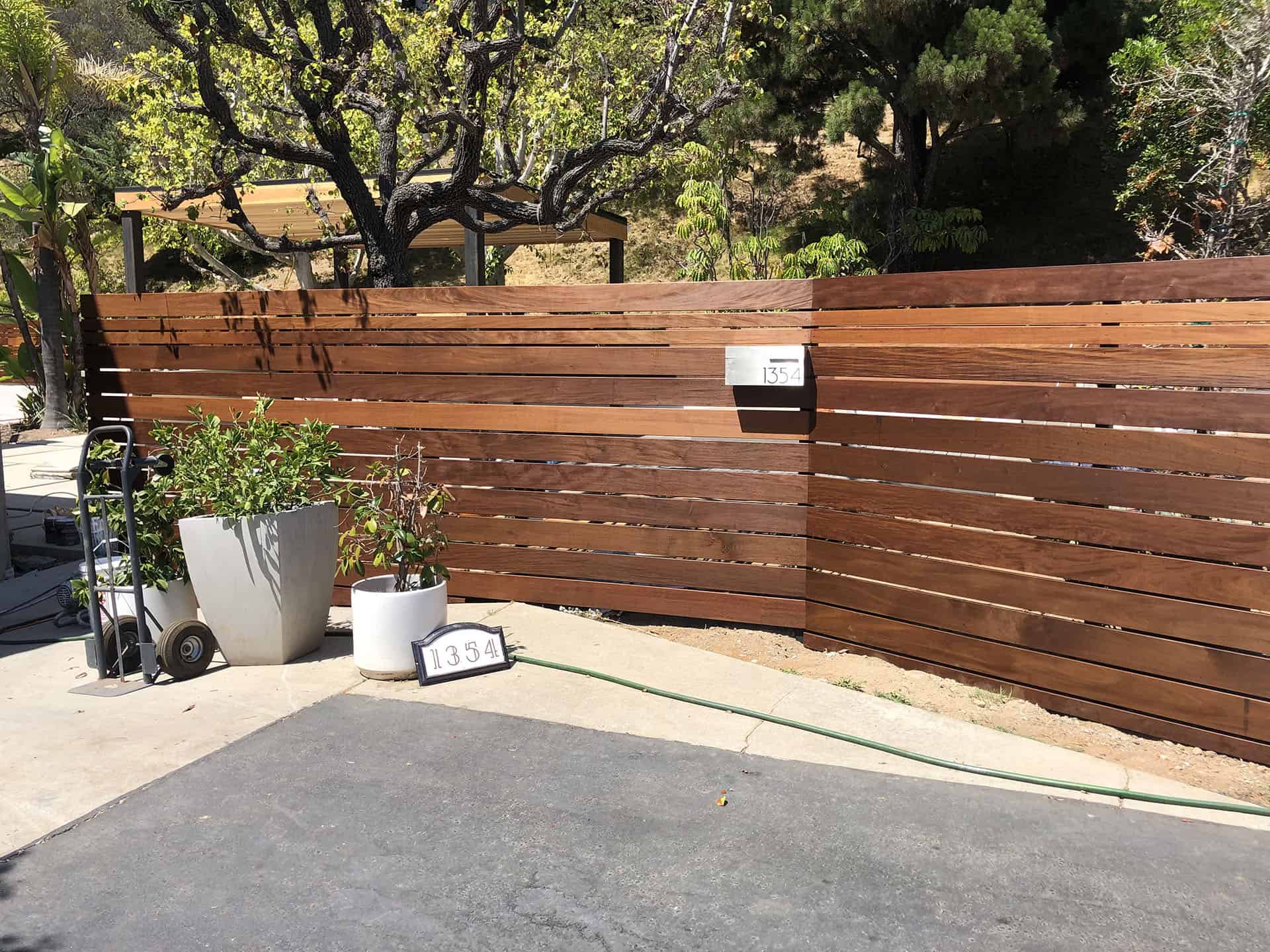
Cedar is the value end and takes stain beautifully. Redwood sits in the middle and is the LA default for good reason. Ipe and mahogany run roughly three times cedar per foot and last several times as long — dense enough that they are the only woods we will run as wide horizontal slats without expecting the boards to cup.
We quote two or three species on the same layout so the trade is visible. What we will not do is sell ipe detailing at cedar prices, or run a horizontal slat fence in a species that will not hold the line.
Four ways to run the boards
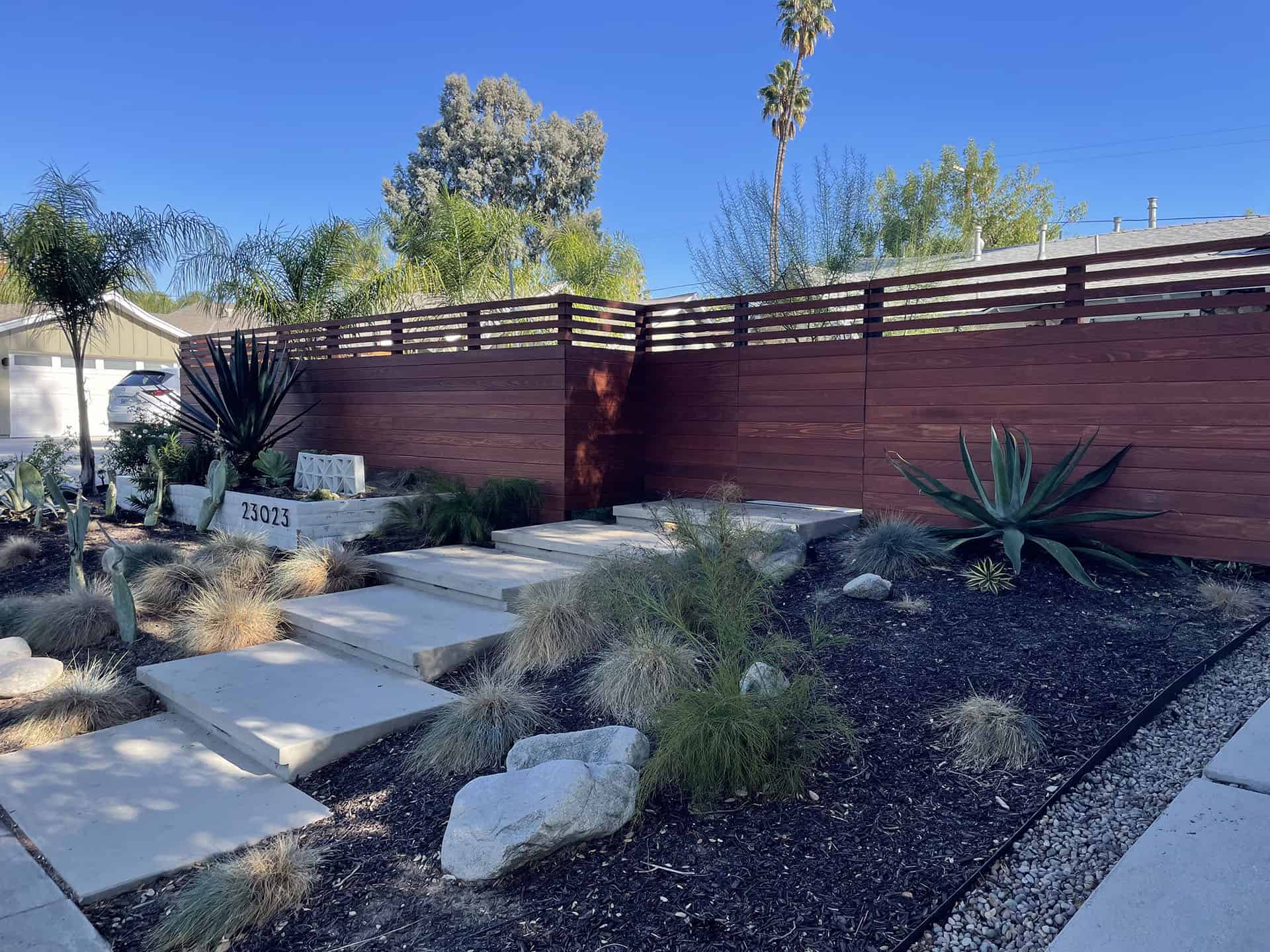
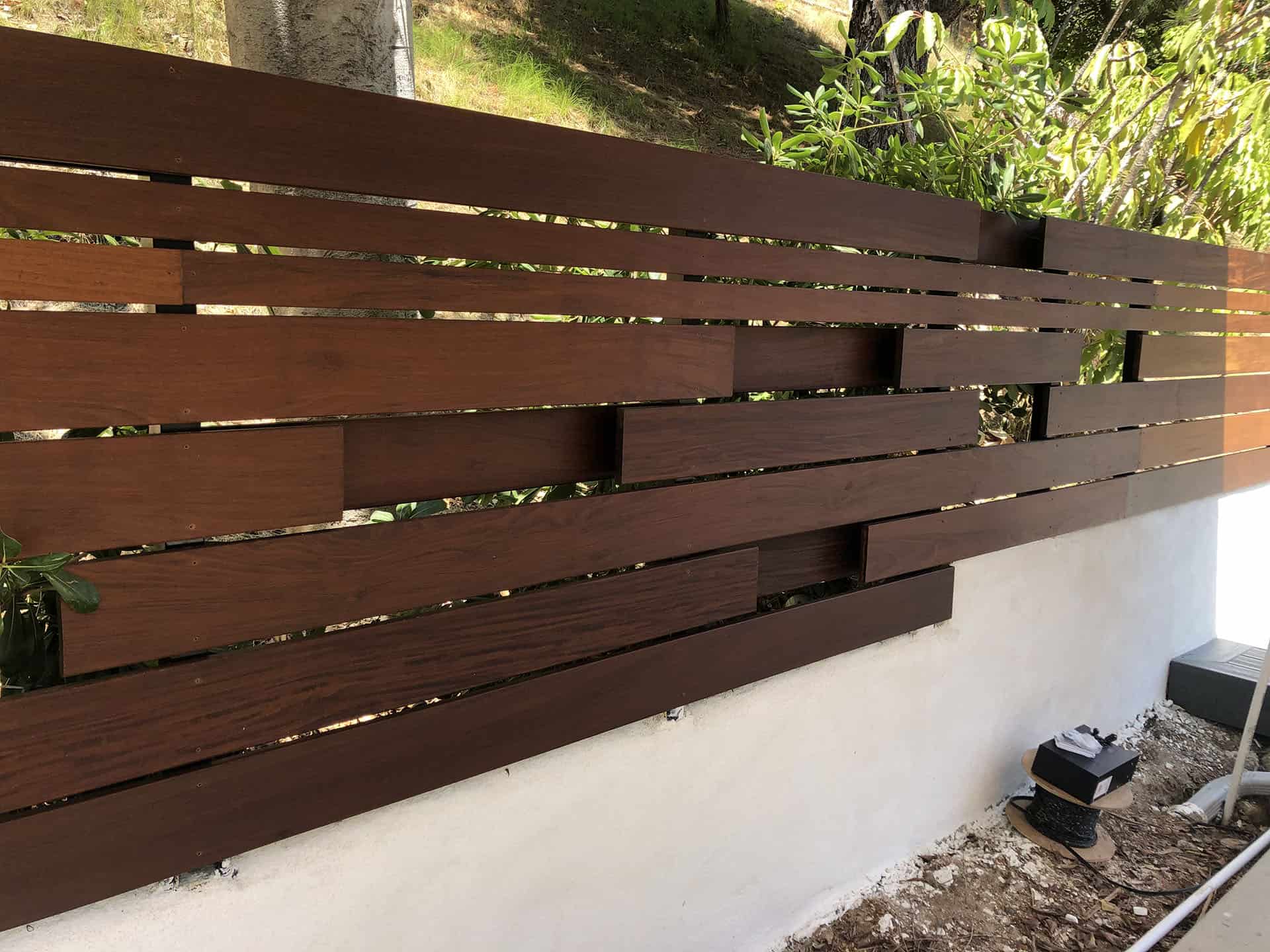
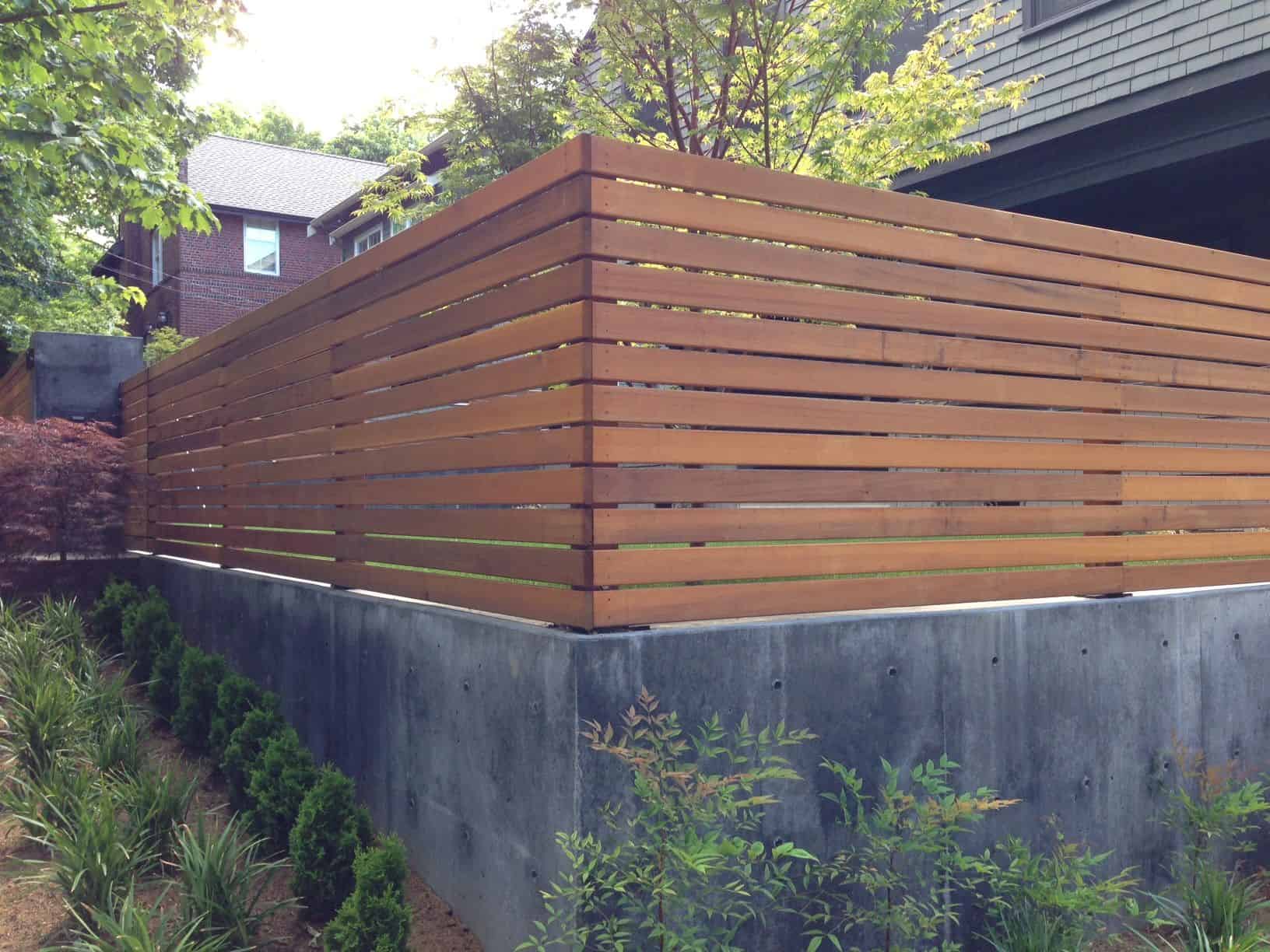
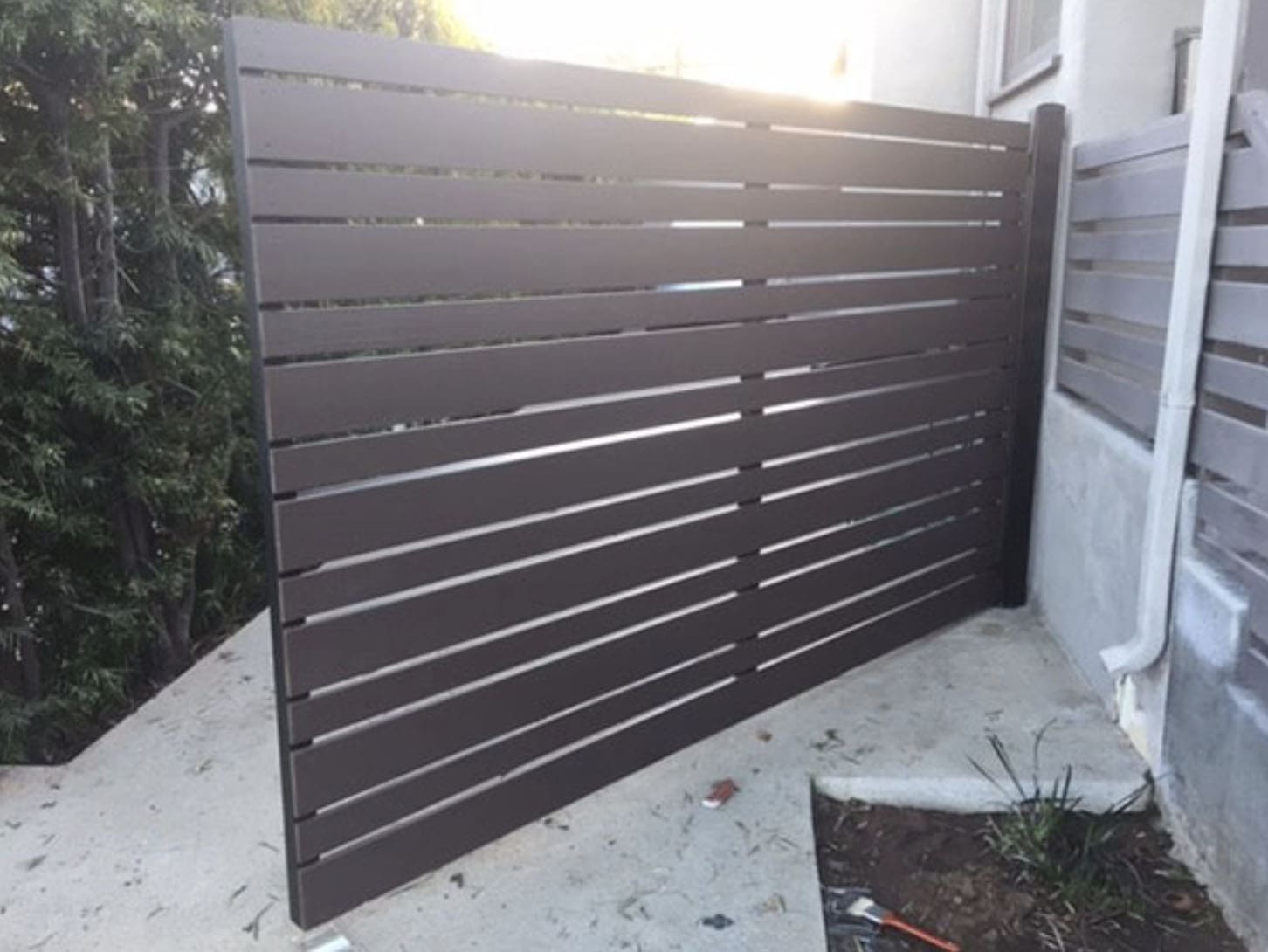
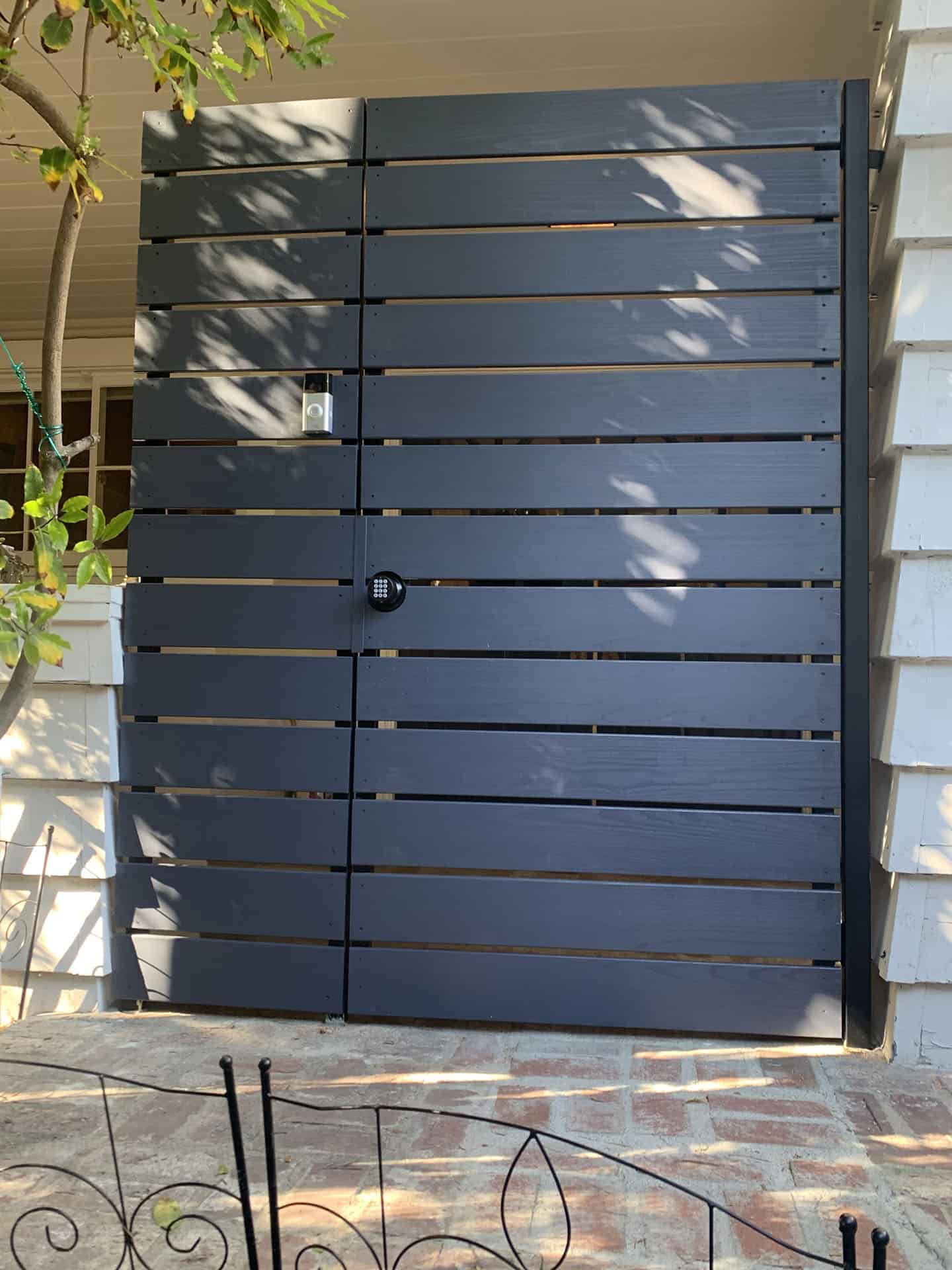
The modern LA default. Needs dense stock and tight post spacing or the boards sag mid-bay. Reveal between slats sets how private it reads.
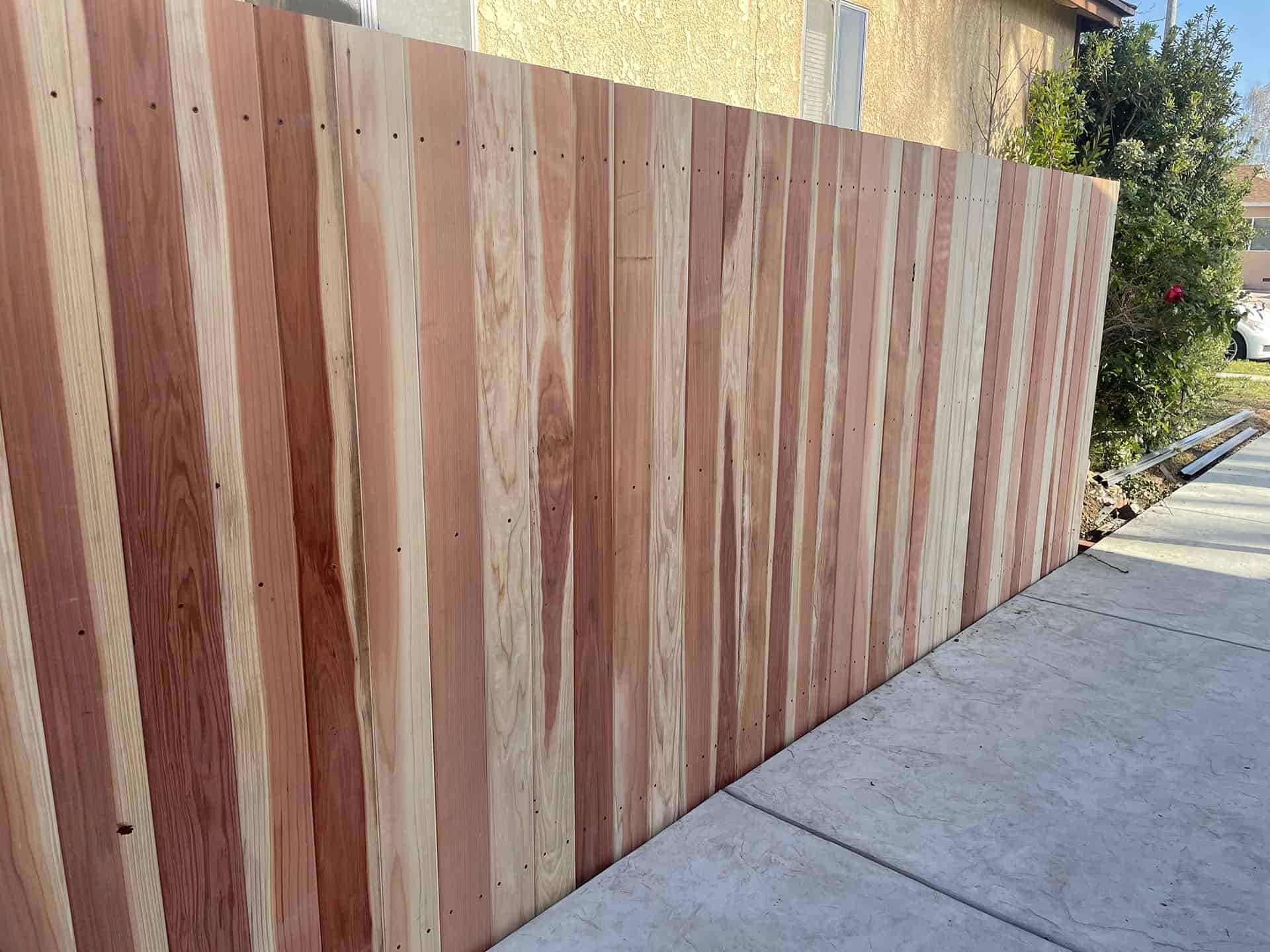
Boards run top to bottom, no gap. The most private and the most wind-loaded — on an exposed run the posts and footings get upsized.
Overlapping vertical boards. Full privacy that still breathes, and seasonal movement never opens a sight line.
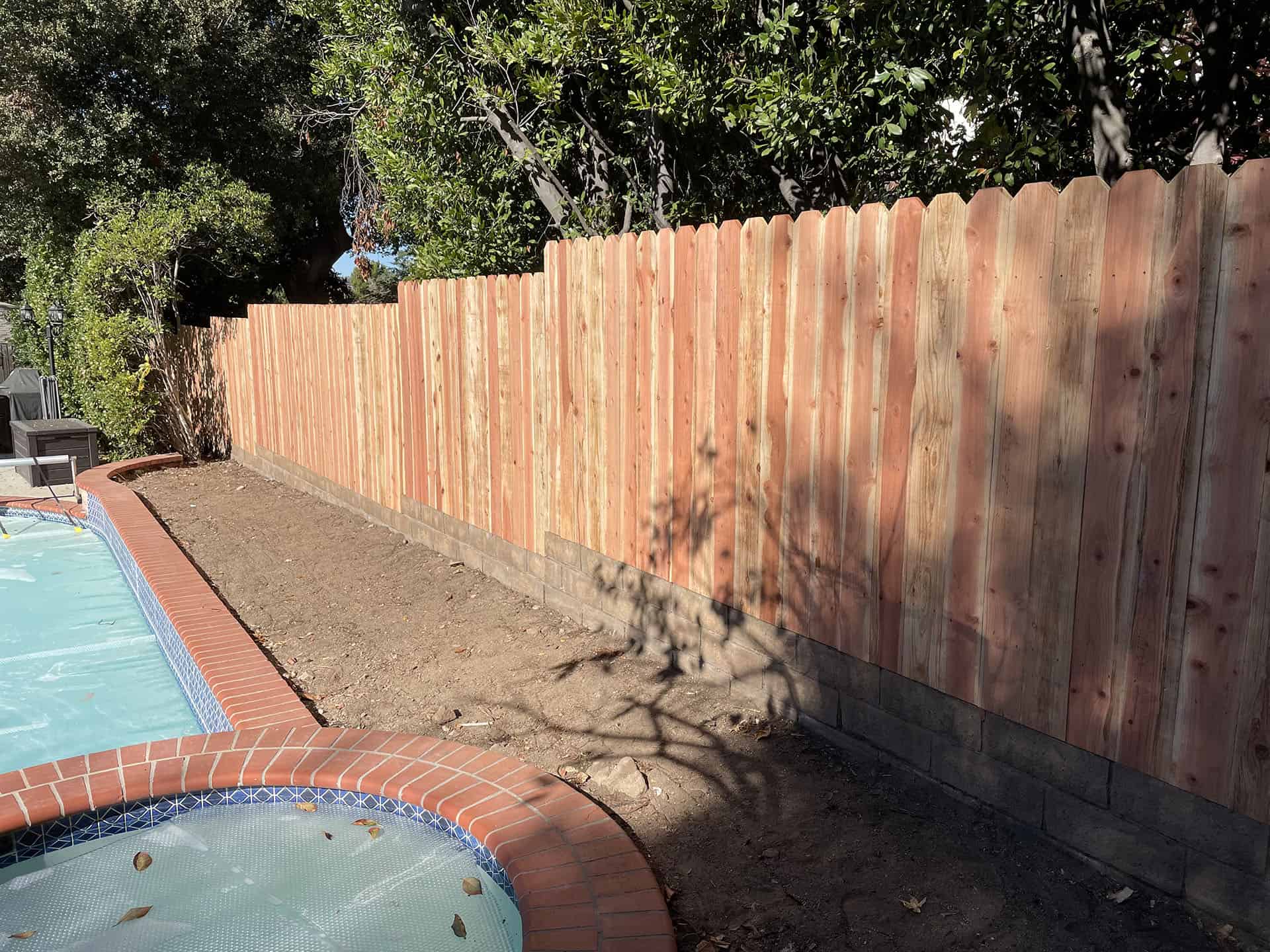
The traditional profile. Cheapest per foot, quickest to install, and the right answer for a long back-yard boundary nobody sees from the street.
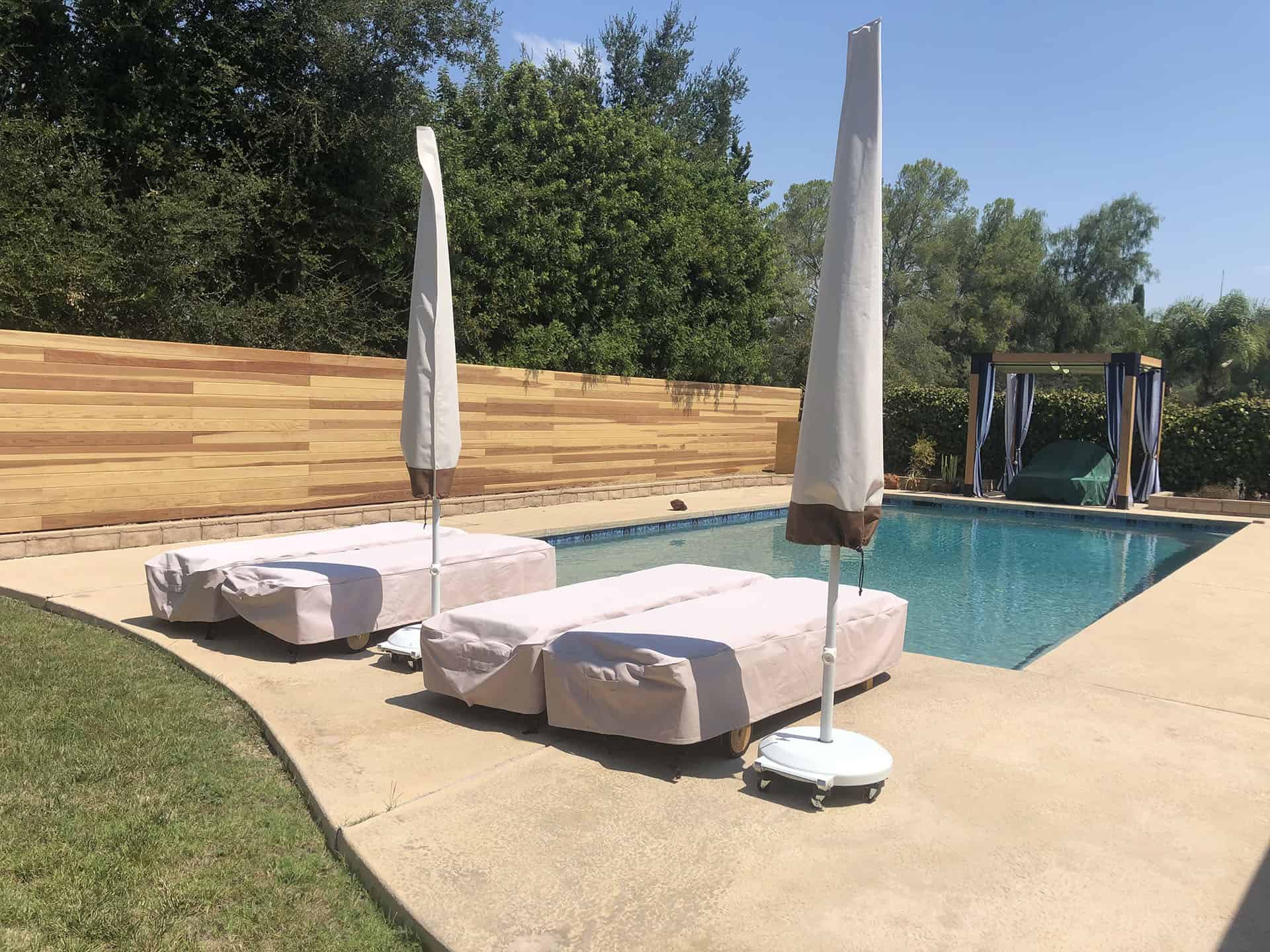
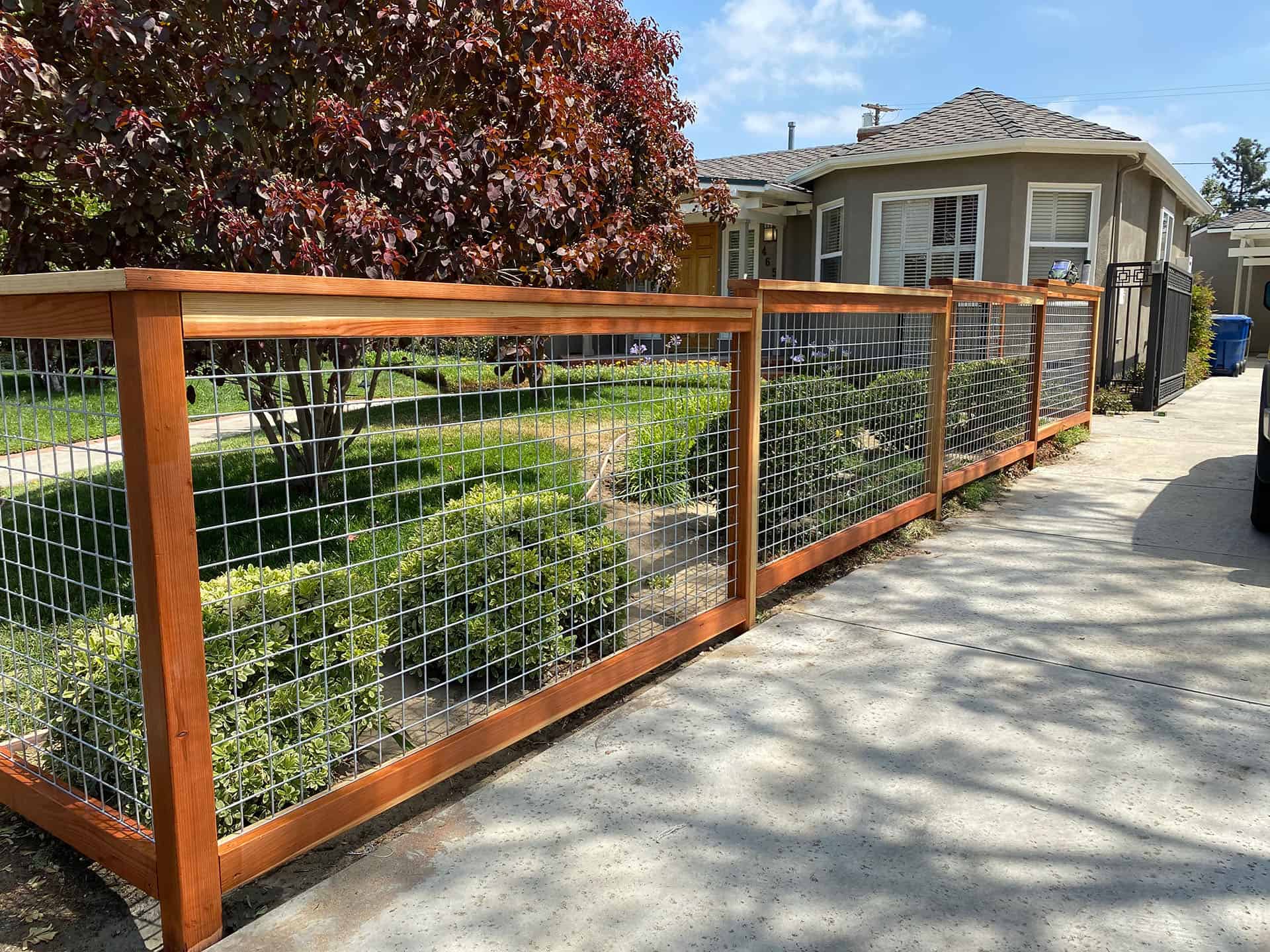
Wood fence we have built
What decides the detail
Hardwood shrinks and swells across the season. Fastenings and reveals are detailed for it, and gates get adjustable hinges so the gap can be reset without cutting.
Wood in permanent contact with soil rots from the base up. Posts get a drained base and, where the budget allows, a steel post inside the wood sleeve.
Penetrating oil, not film-forming paint. A film traps moisture behind it and peels; oil weathers evenly and re-coats without stripping.
Questions we get asked
How long does a wood fence last in Los Angeles?
Cedar runs ten to fifteen years, redwood fifteen to twenty, ipe and mahogany thirty or more with re-coating. The variable that matters most is not the species but the post base: a drained, properly concreted post outlives a neglected one by a decade regardless of what is bolted to it.
How do I maintain a wood fence?
Re-coat with penetrating oil roughly every eighteen to twenty-four months depending on species and sun exposure. Keep sprinklers off the boards — constant irrigation spray is the fastest way to rot an otherwise sound fence. Clear soil and mulch away from the base once a year.
Should I stain or leave the wood to grey?
Both are legitimate. Ipe and redwood weather to a silver-grey that many clients want, and that greying is cosmetic rather than structural. Staining holds the original colour and adds UV protection, at the cost of re-coating on schedule. We will quote either.
Horizontal or vertical boards?
Horizontal reads modern and suits flat or gently sloping runs, but needs dense stock and tighter post spacing so boards do not sag mid-bay. Vertical is more forgiving on rough grade and cheaper in cedar. On a steep hillside, vertical usually wins.
Get a real number
Tell us the opening width and we will tell you what it takes. Site visits are free inside the service area and take about forty minutes.