
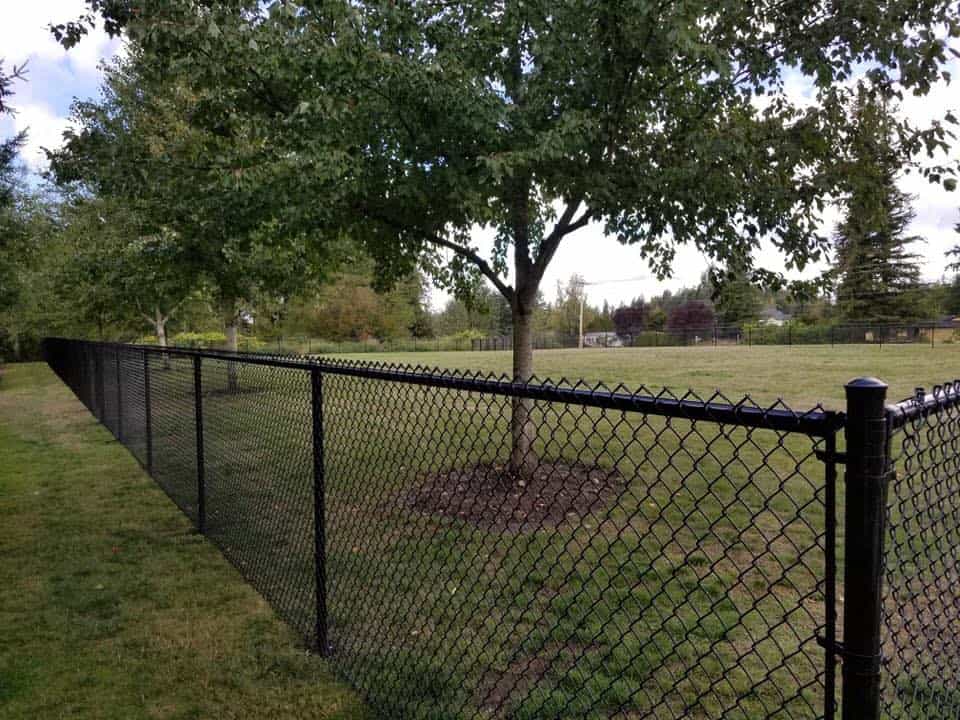
Gauge and coating do the work
Chain link is specified by wire gauge, mesh opening and coating, and those three decide almost everything. Residential 11½ gauge is fine for a back boundary; anything commercial, or anything a dog leans on daily, wants 9 gauge. Lower number, thicker wire.
Galvanised-after-weaving lasts substantially longer than galvanised-before, because the cut ends get coated too. Black or green vinyl over galvanised core costs a little more, visually disappears against planting, and is what most residential clients actually want once they see the two side by side.
Common configurations
The standard back-boundary fence. Cheapest per foot of anything we install, and quick to put up over long runs.
Galvanised core with a bonded vinyl skin. Visually recedes against planting instead of glinting, and the coating adds corrosion life.
9 gauge, taller, tighter mesh, with a bottom rail or tension wire. For yards, sites and anywhere the fence is the actual security layer.
Vertical slats woven through the mesh. Buys privacy without the cost of a solid fence, but adds wind load — posts get sized for it.
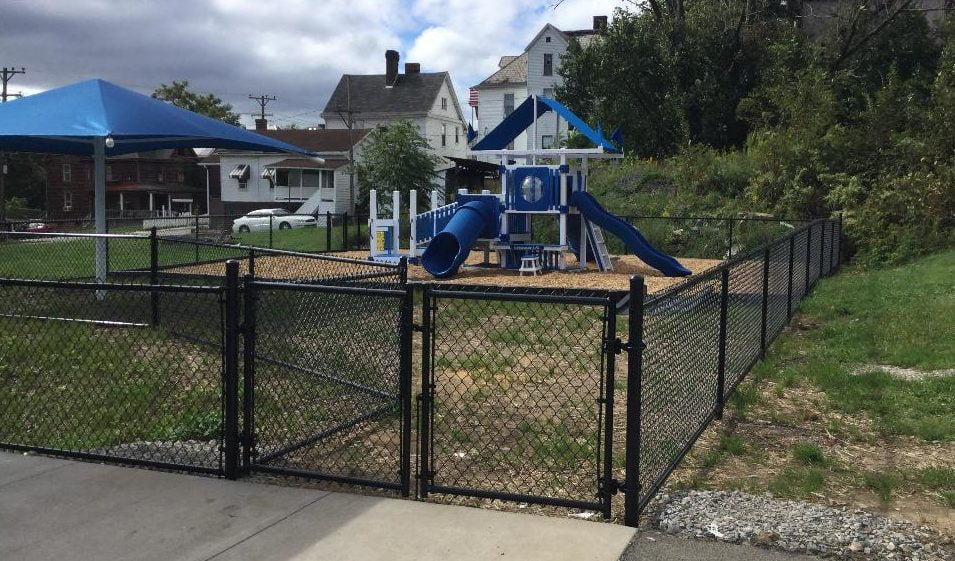
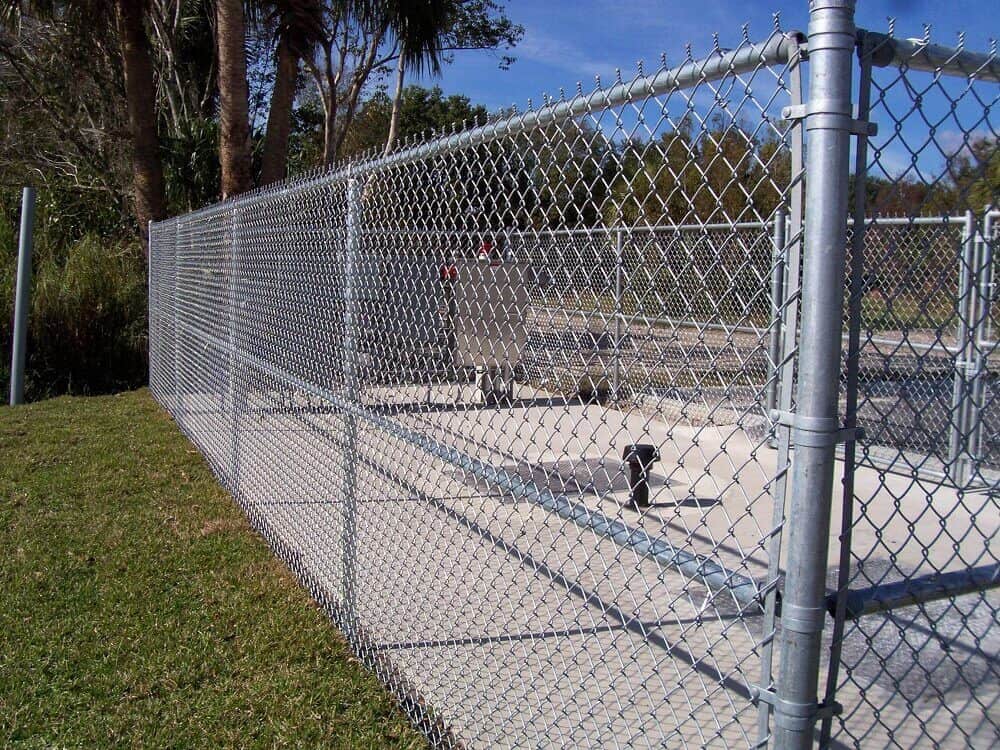
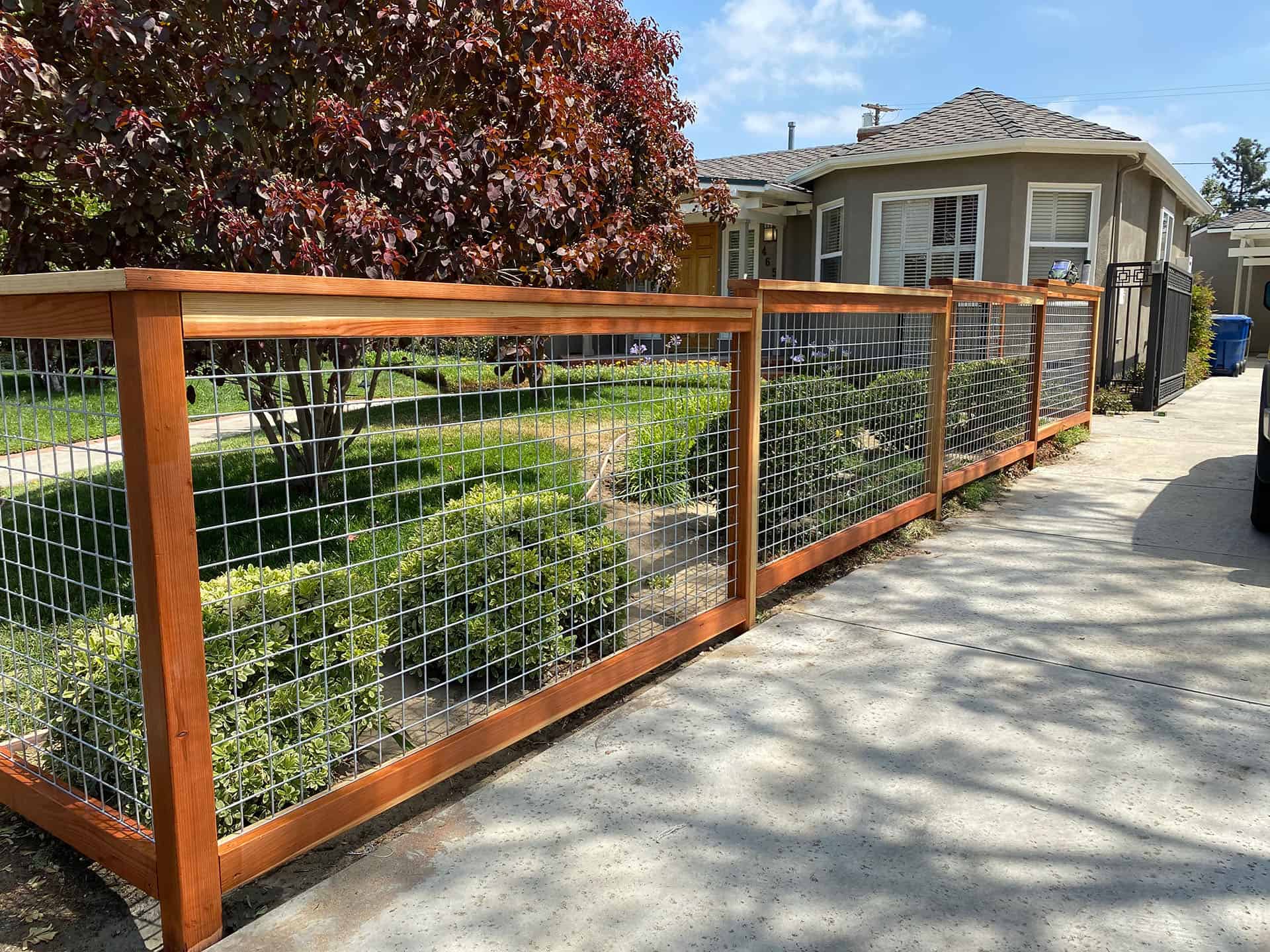
Chain link fence we have built
What decides the detail
Welded mesh, not woven, wherever the run is long and re-tensioning is impractical. Woven sags at 8′ bays and cannot be pulled tight again.
Terminal, corner and gate posts carry all the tension and get bigger pipe and more concrete than line posts. Cutting that corner is why cheap chain link leans.
A bottom rail or tension wire stops the mesh being pushed up. Without one, a dog is under the fence in an afternoon.
Questions we get asked
What are the benefits of a chain link fence?
Cost per foot, speed of installation and near-zero maintenance. It secures a boundary without blocking light or air, it does not rot or need re-coating, and damaged sections can be spliced rather than replaced wholesale. For long runs and large lots nothing else is close on price.
Chain link or wood — which should I choose?
Chain link where the job is security, containment or a long boundary nobody looks at. Wood where the fence is part of how the property presents from the street. Plenty of our clients use both: wood across the frontage, chain link down the side and back.
Can chain link be made private?
Yes, with vertical privacy slats woven through the mesh, or with planting. Slats get you roughly 75–90% opacity for a fraction of a solid fence. They do add wind load, so posts and footings get sized for the slatted condition rather than the bare mesh.
How long does chain link last?
Galvanised-after-weaving runs twenty to thirty years inland. Vinyl-coated over a galvanised core goes longer, and looks better doing it. The usual failure is not the mesh but a leaning terminal post that was never given enough concrete.
Get a real number
Tell us the opening width and we will tell you what it takes. Site visits are free inside the service area and take about forty minutes.