
Most fence failures are post failures
A fence is only as good as what is under the ground. Posts go in concrete, below the frost-free depth that matters far less here than drainage does — in LA the killer is water sitting around the post base in a wet winter, then baking out in summer. We set posts so water drains away from them rather than pooling.
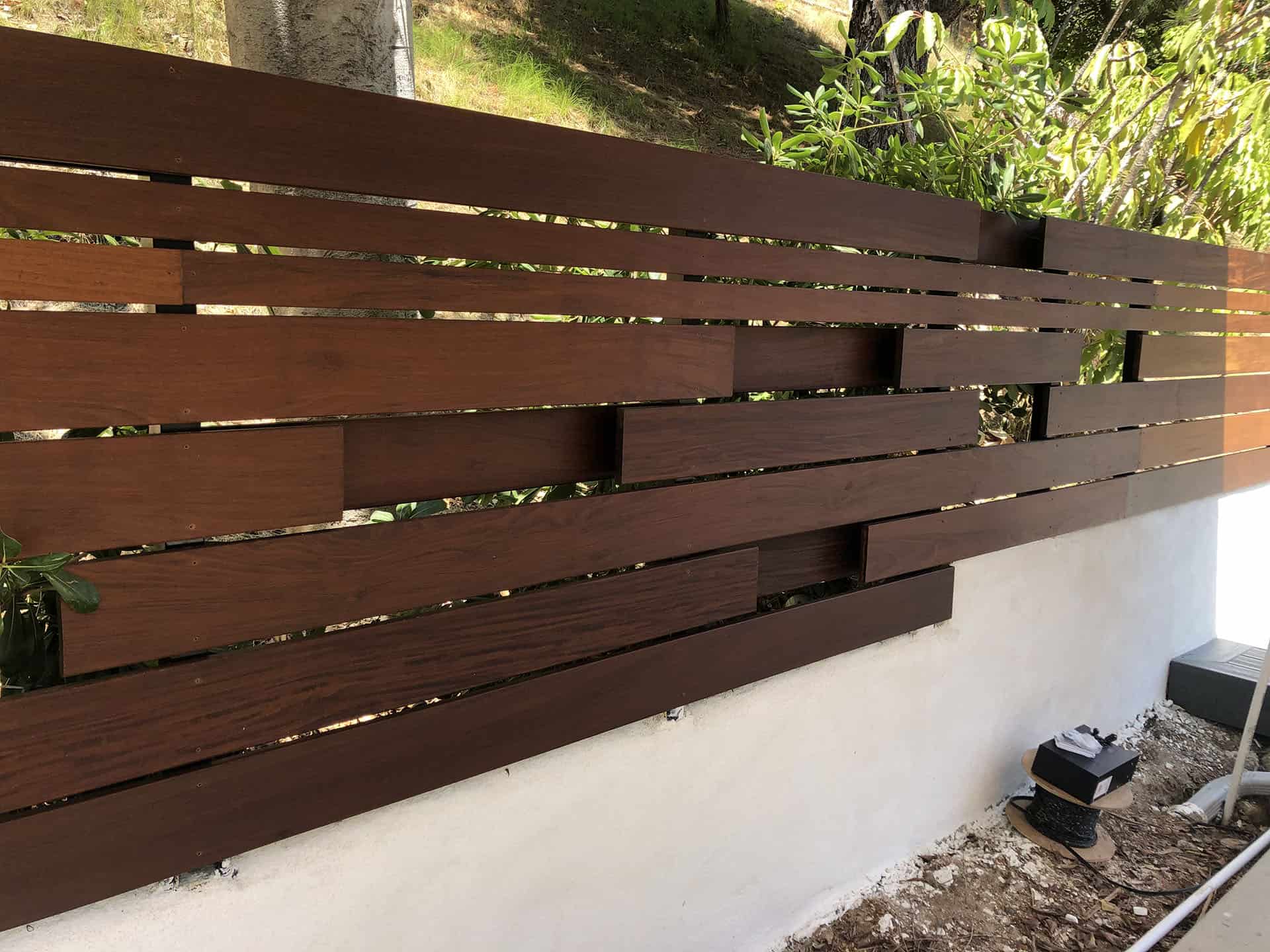
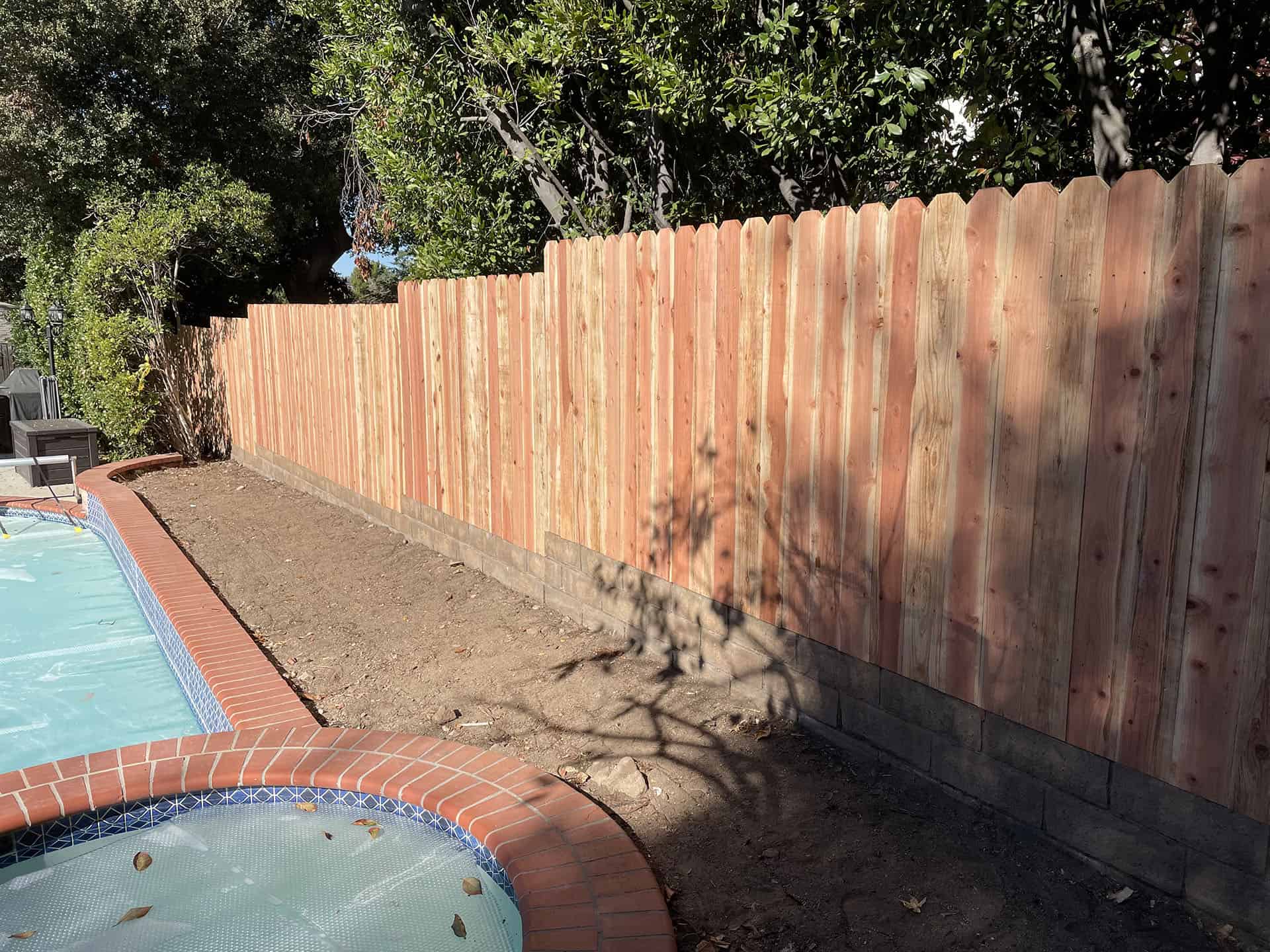
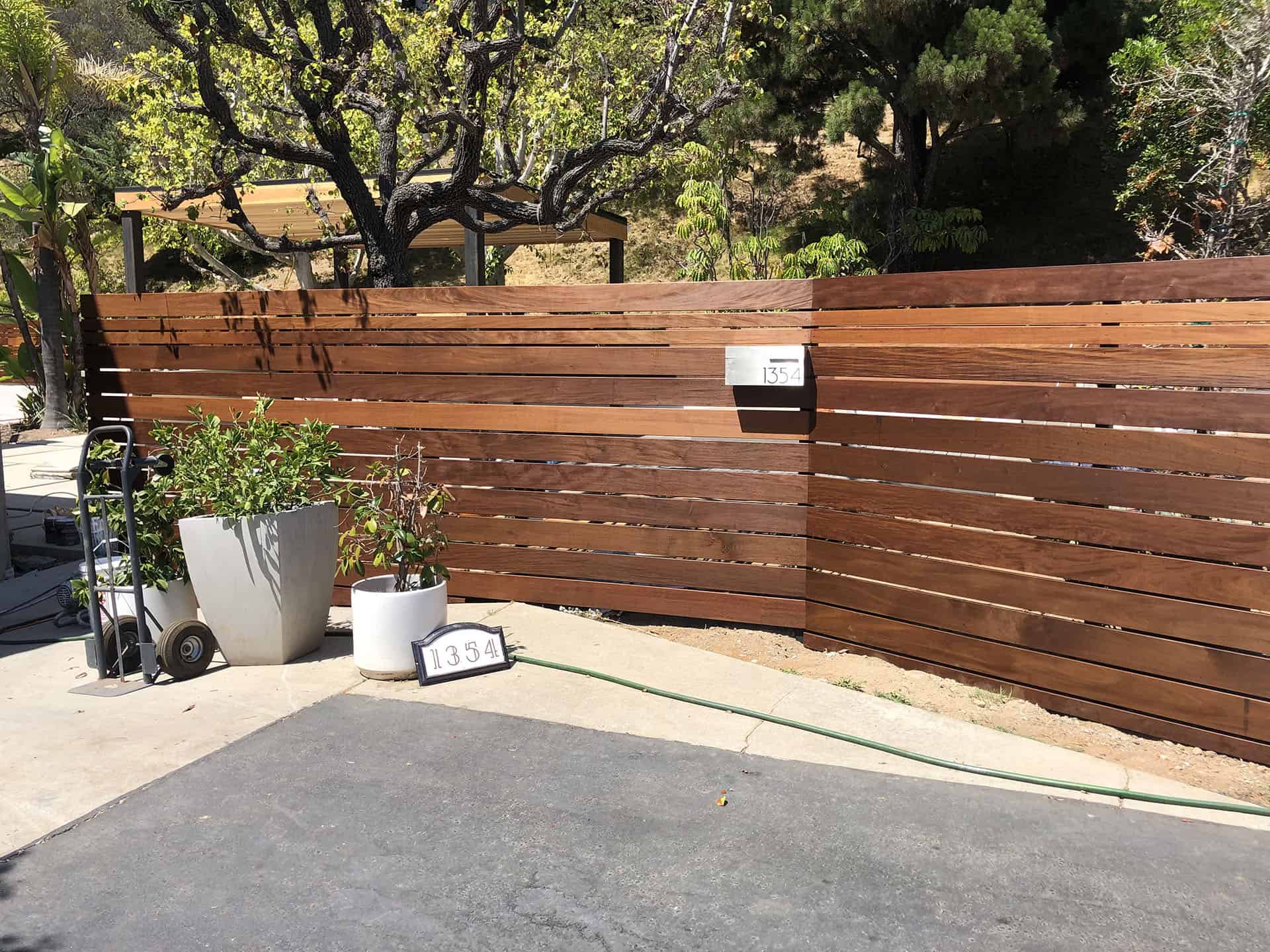
On grade, panels step with the slope and the rails stay level. Raking a panel to follow the hill is faster and cheaper, and it always looks wrong from the street — the top line wanders while every other horizontal on the property stays true.
What we build in
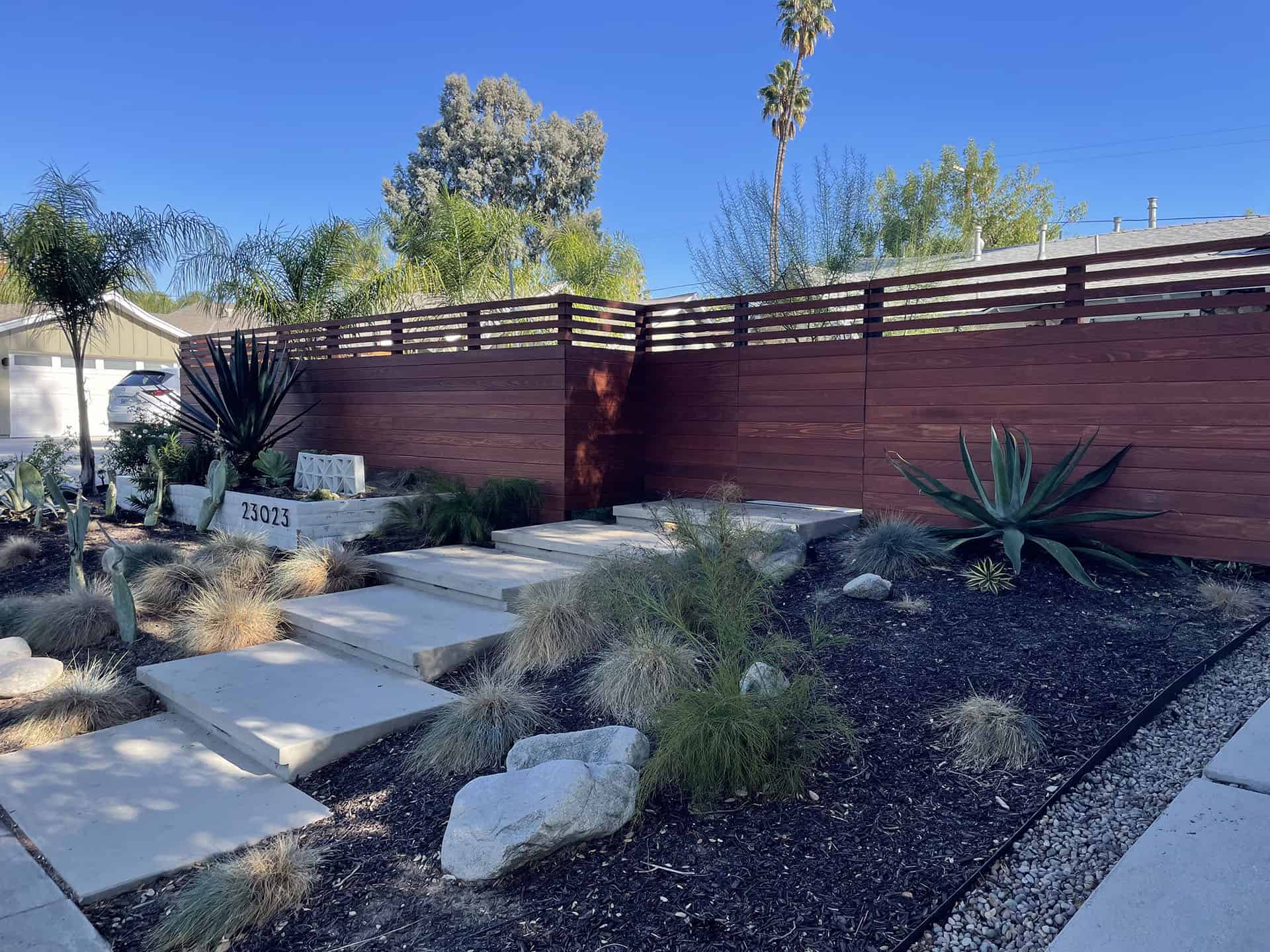
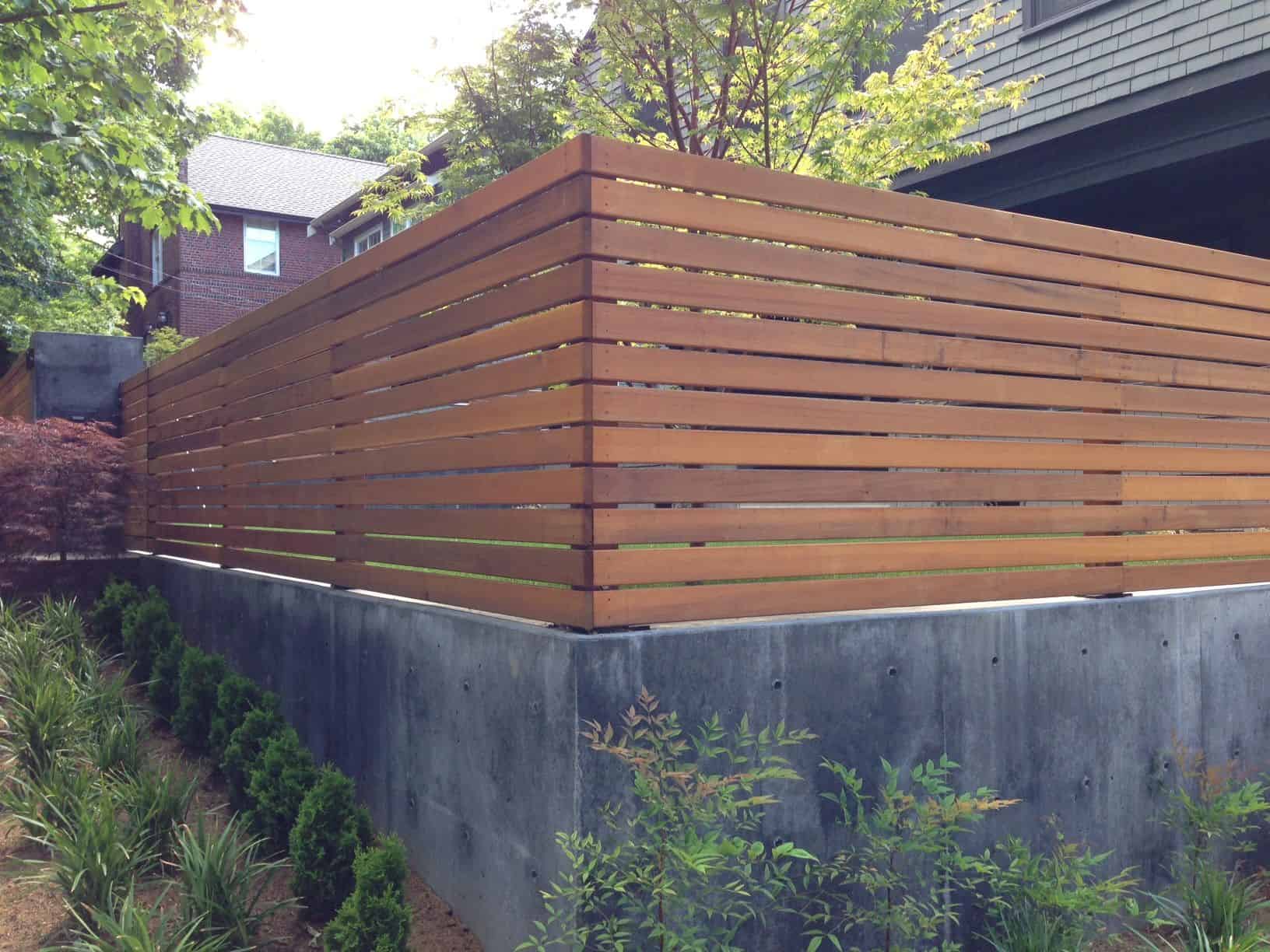
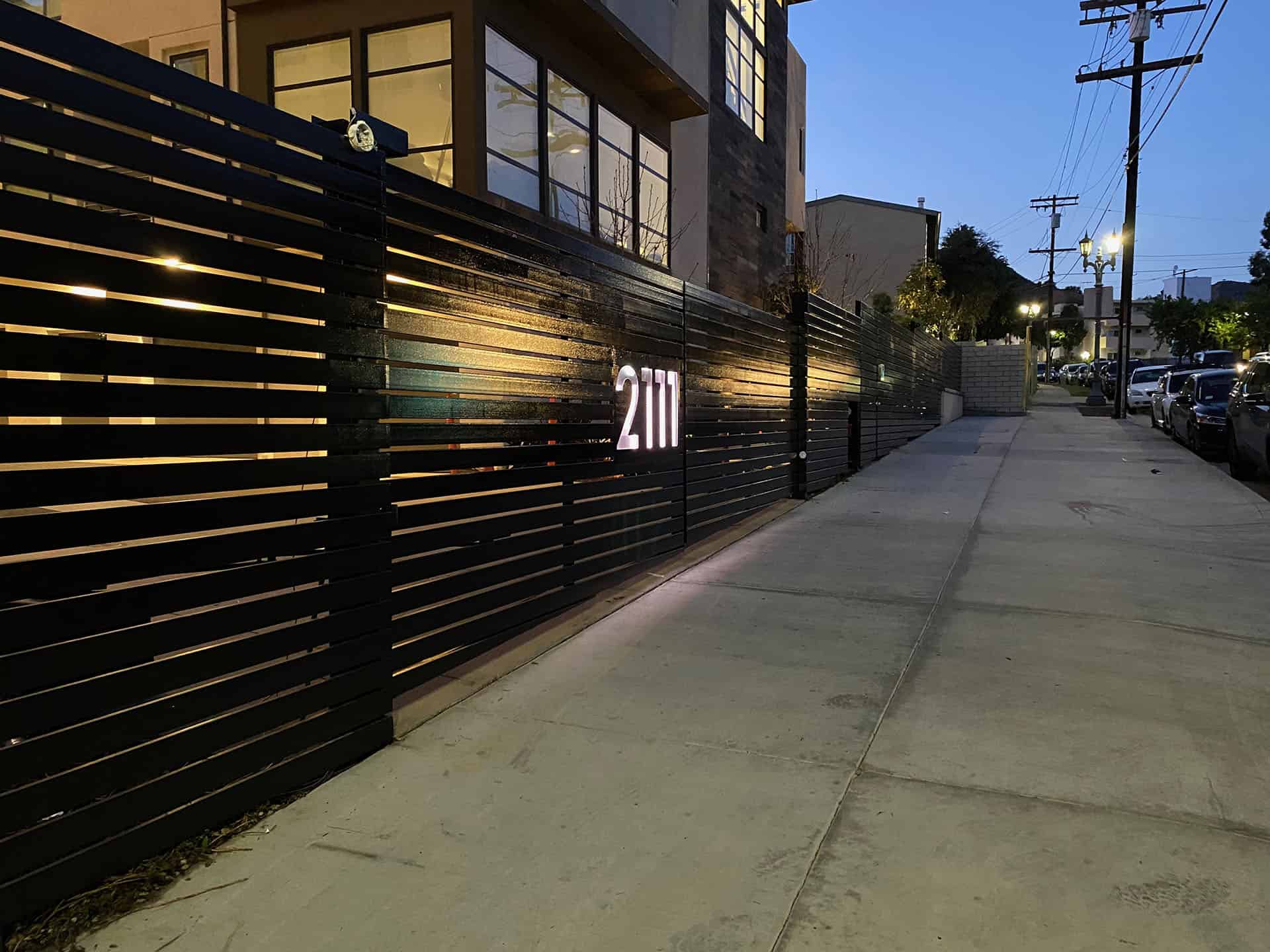
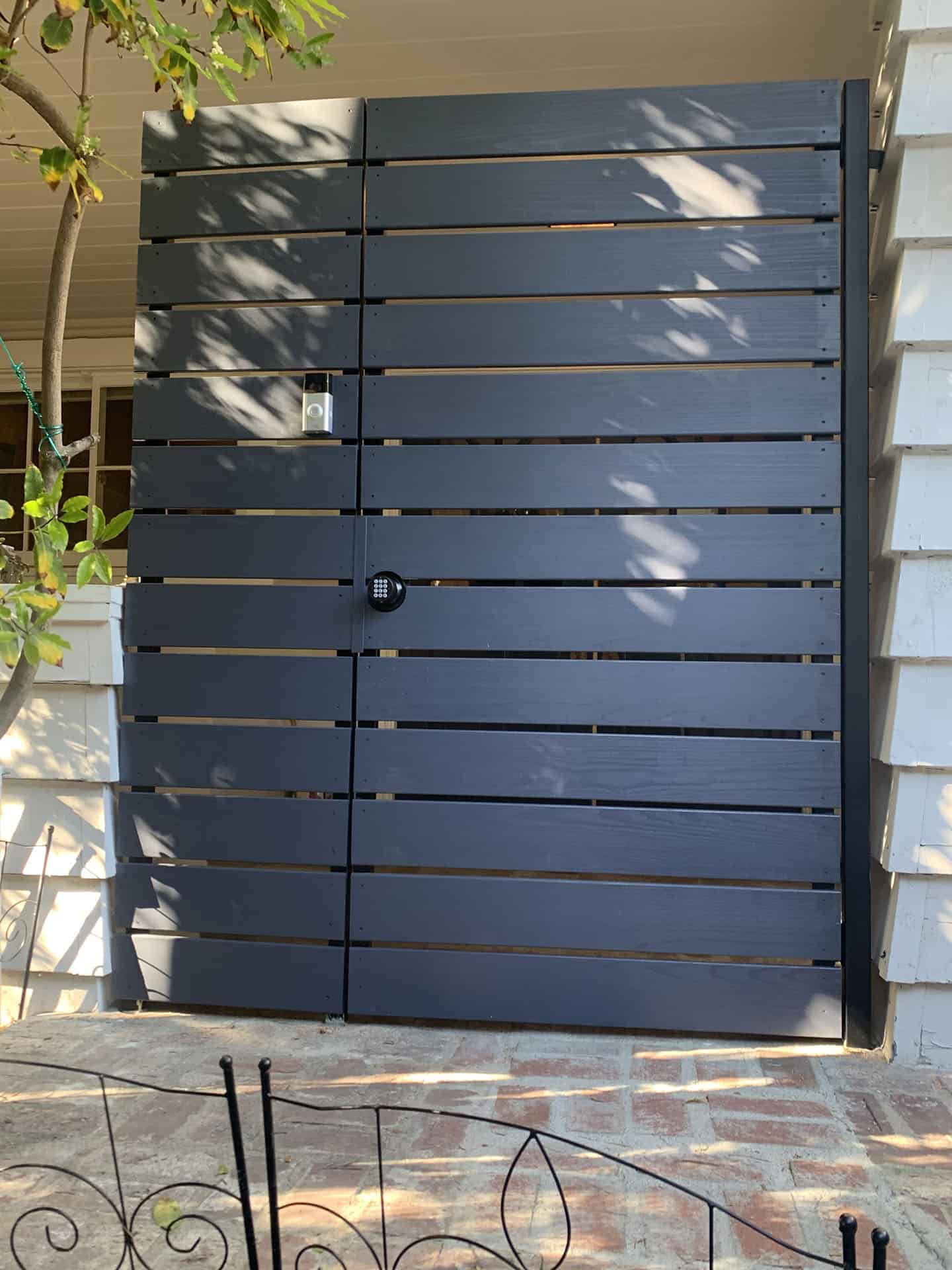
Ipe, mahogany and redwood. The premium option — dense, stable, and the only woods we will run as wide horizontal slats without expecting movement.
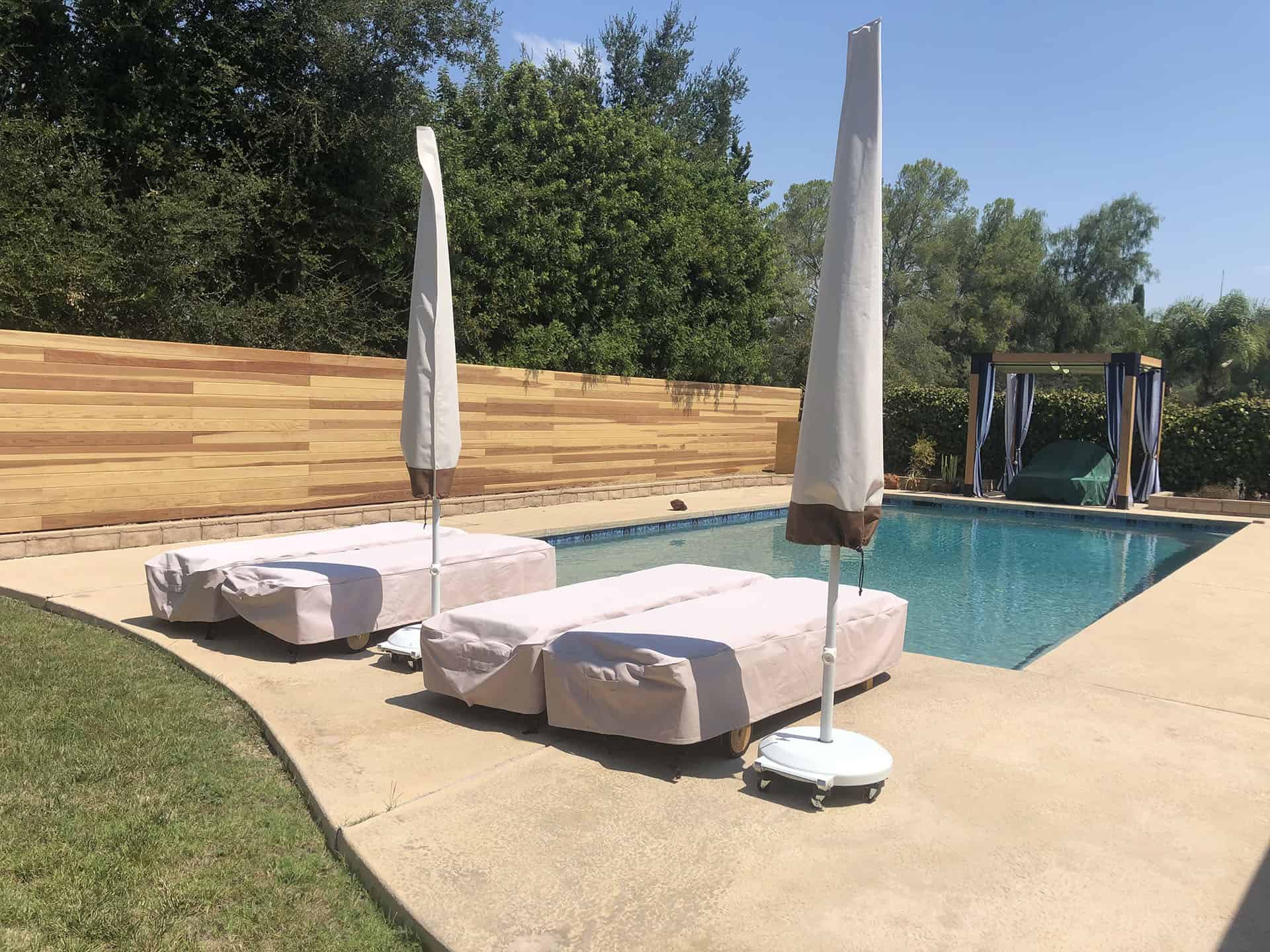
The value option, and perfectly good when detailed properly. Shorter life than ipe, lower cost per foot, and it takes stain well.
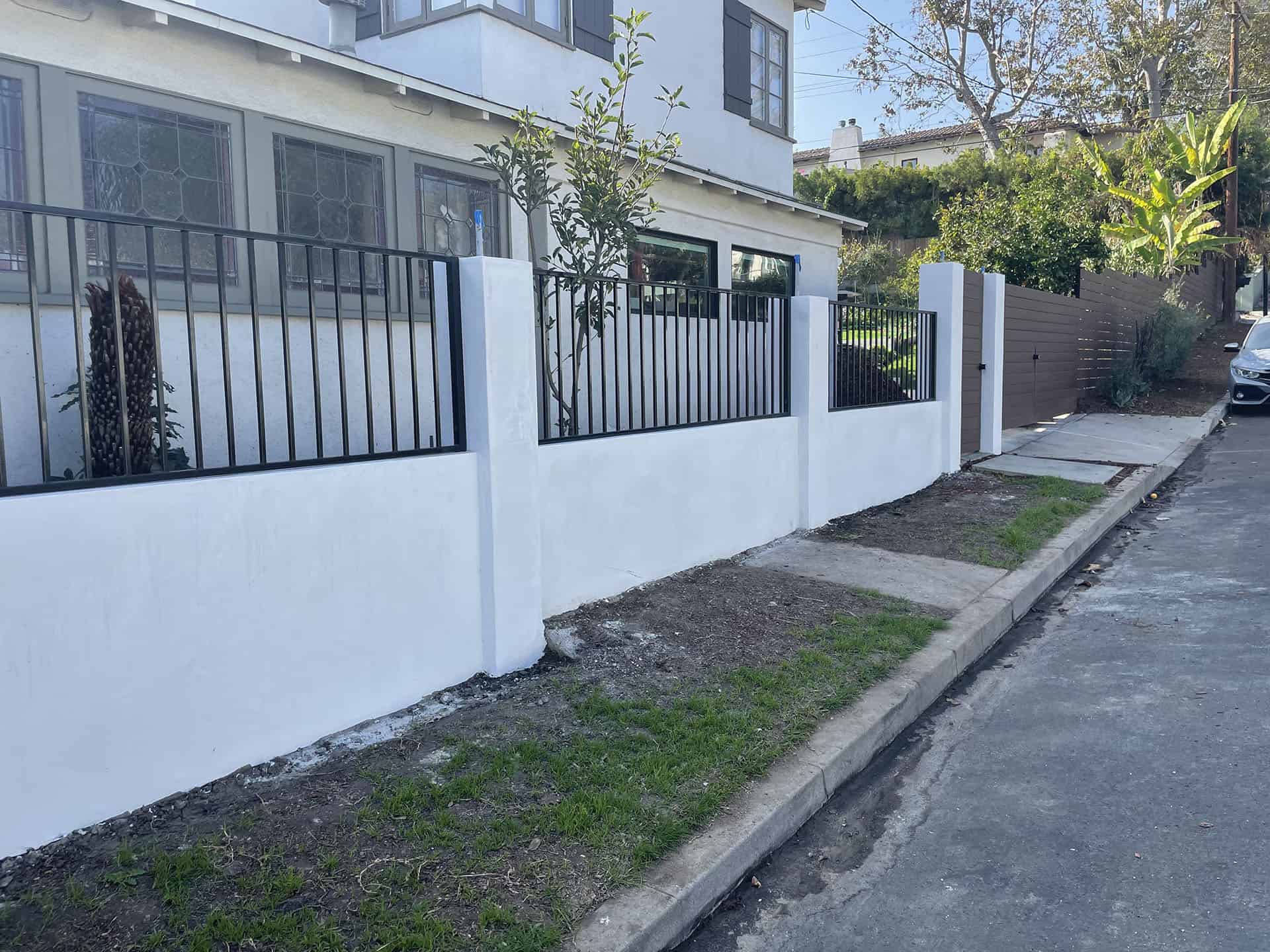
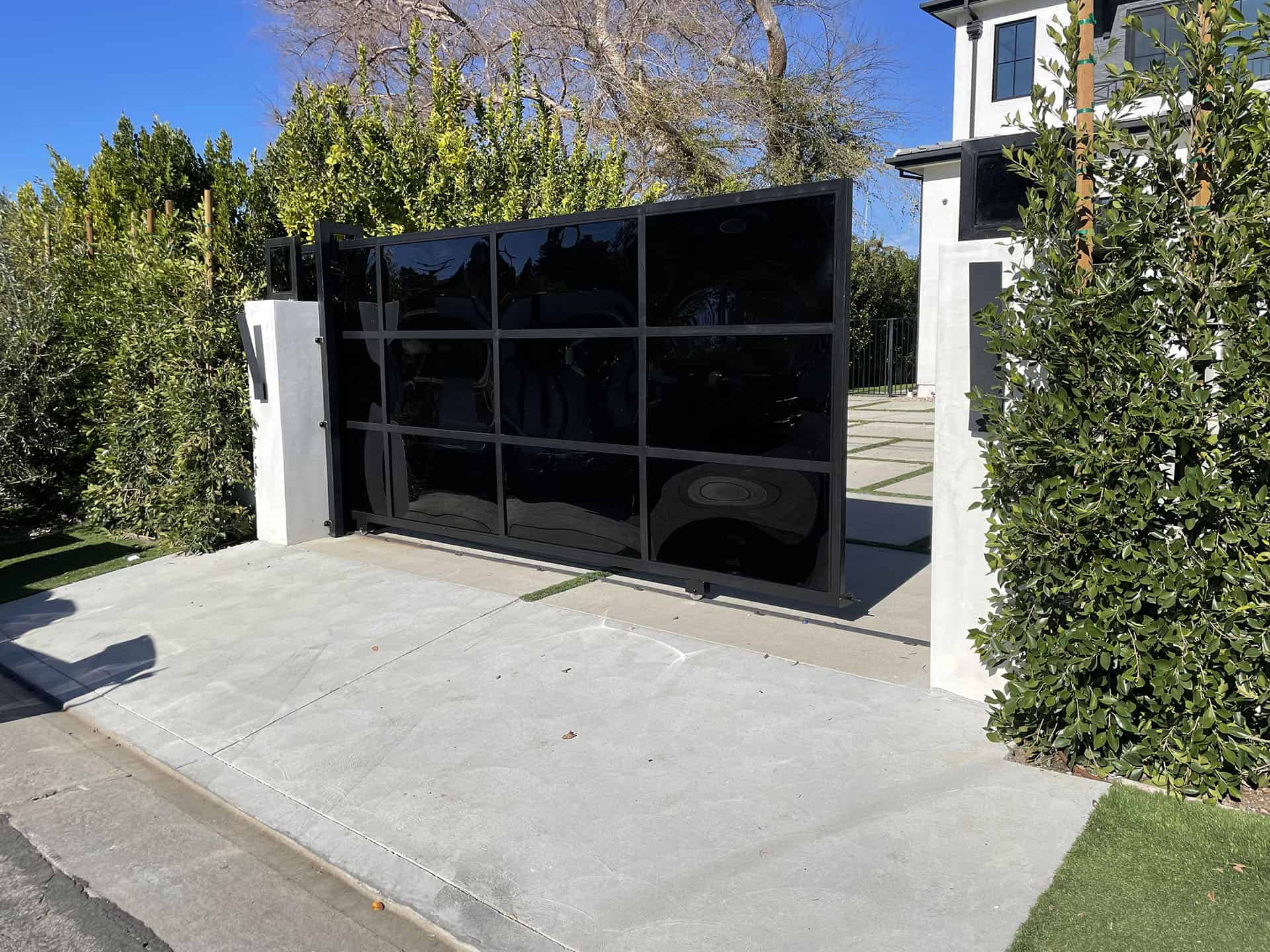
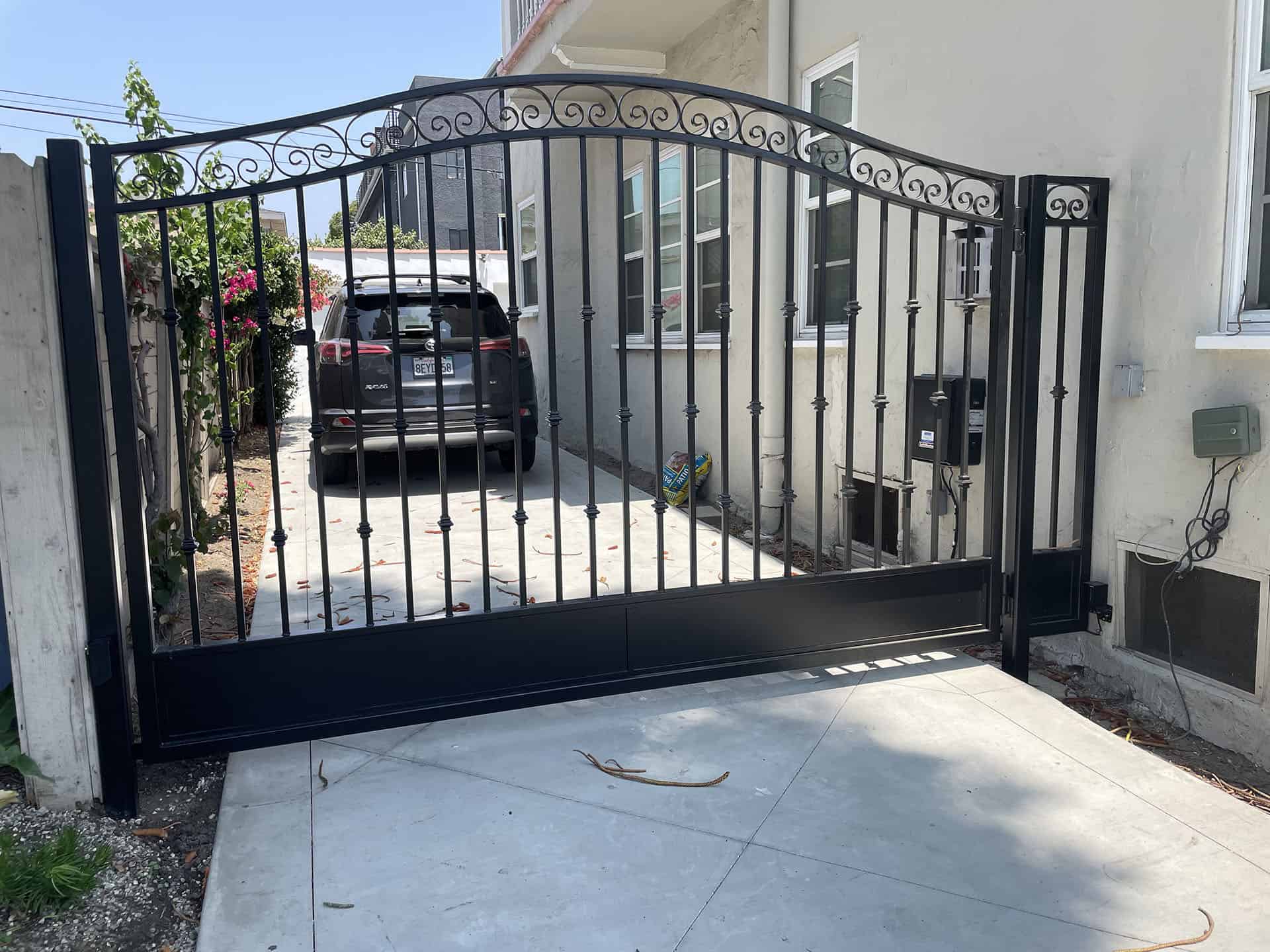
Where you want security without losing the view. Galvanised before powder coat on coastal jobs, core-drilled into stucco pilasters where there are any.
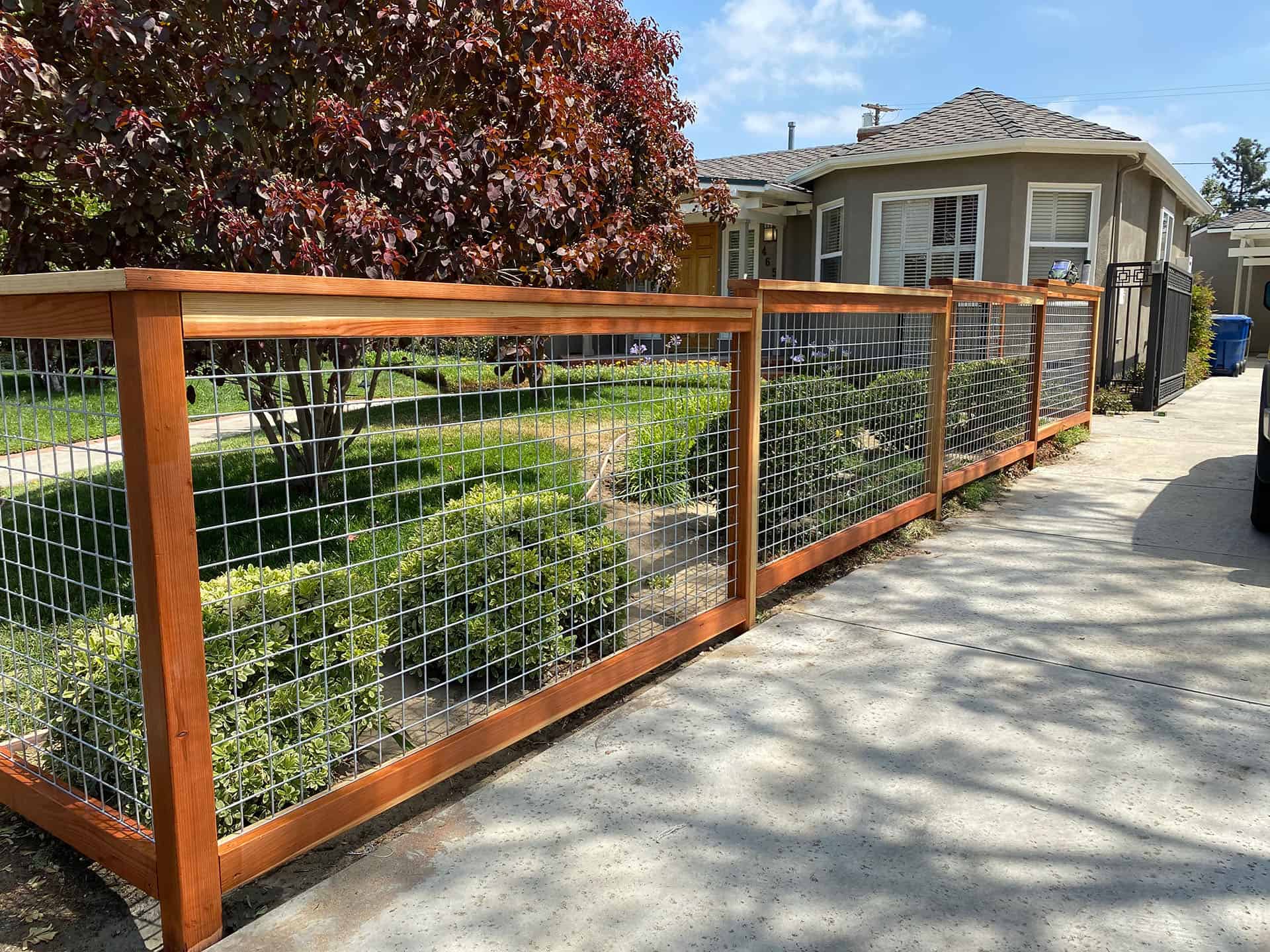
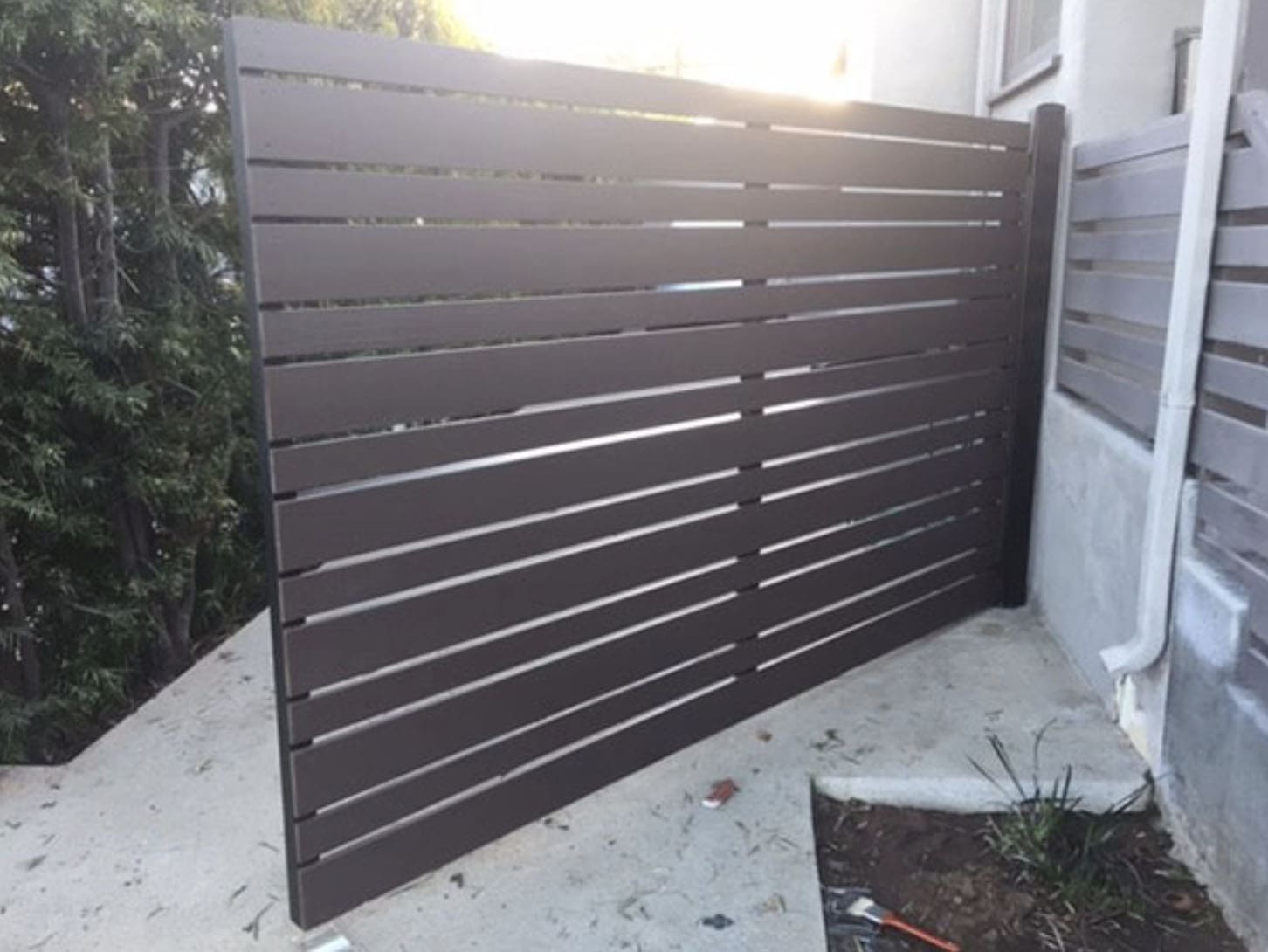
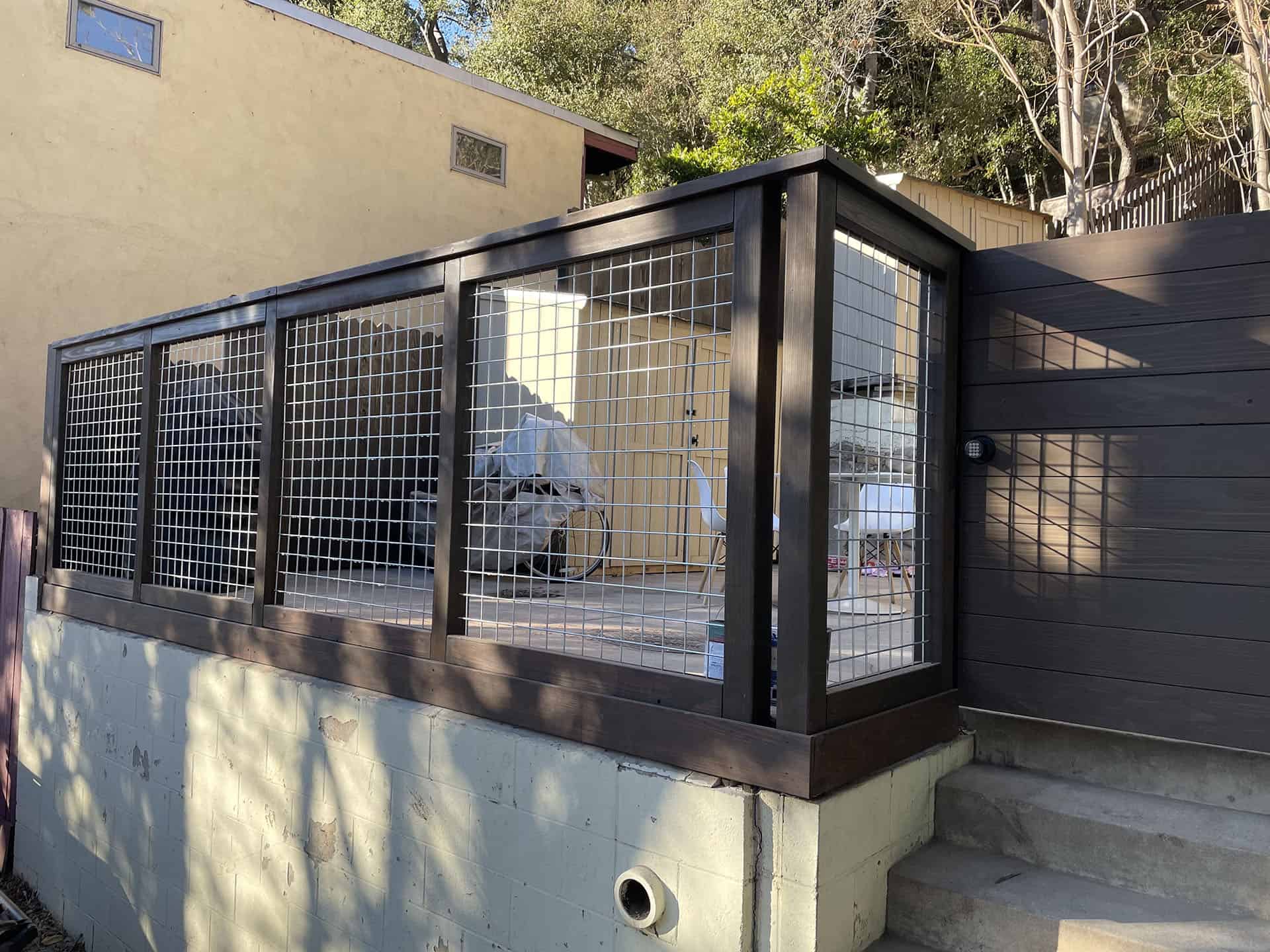
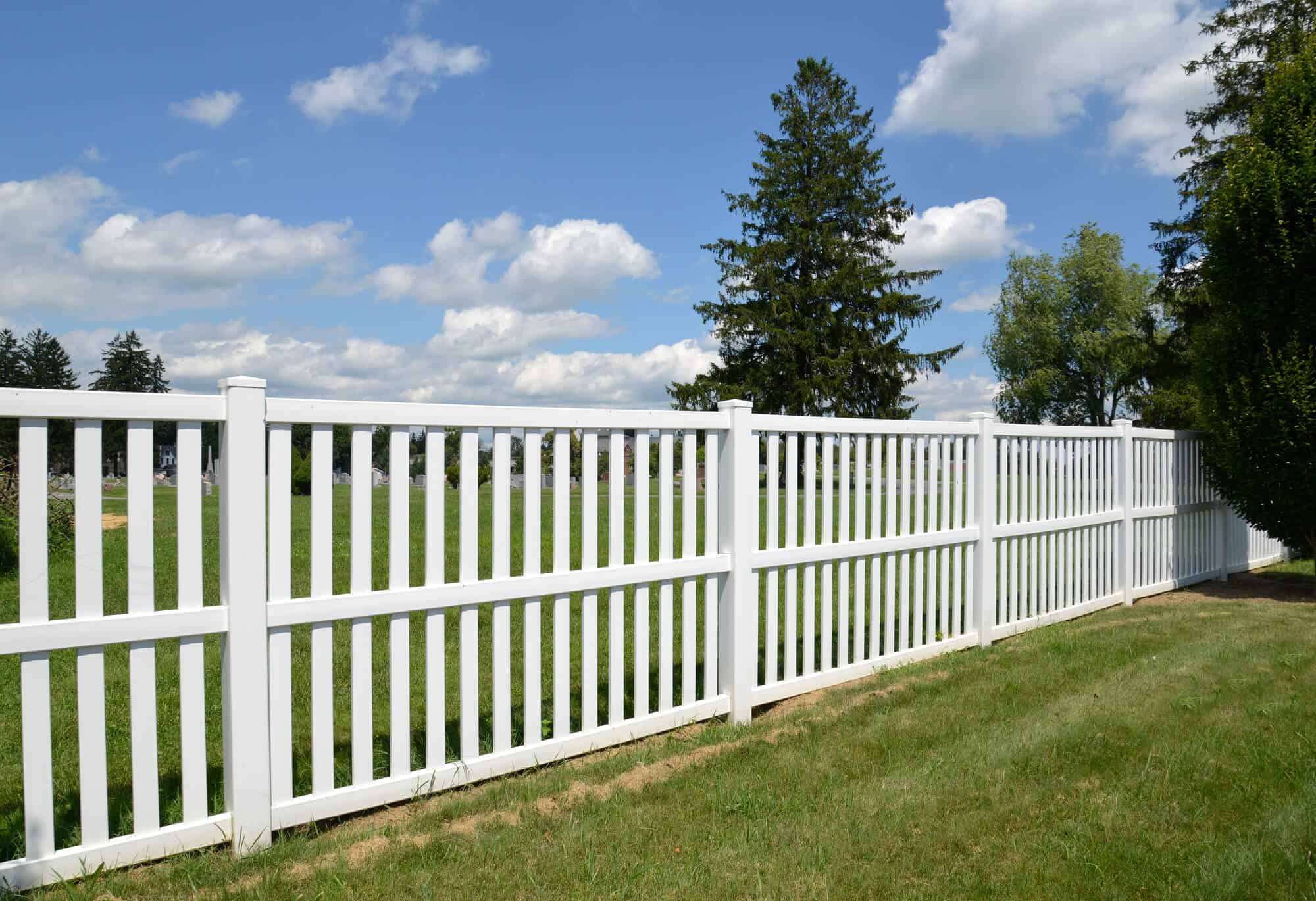
Vinyl for low-maintenance privacy, welded hog wire in a wood frame where you want a boundary that does not block the garden.
Fence installation we have built
What decides the detail
Hillside runs get stepped panels on level rails. Raking a panel to follow the slope is quicker and always looks wrong from the street.
Coastal Santa Monica gets hot-dip galvanised substrate under the powder coat. Inland Encino does not need it, and charging for it there would be dishonest.
Pool barriers are set by code, not preference: no climbable horizontal on the inside face, self-closing and self-latching leaf, latch height fixed.
Questions we get asked
How long does a fence installation take?
A straightforward residential run is two to four days once materials are on site: a day to set posts, then a curing gap, then panels and gates. Hillside work, hardwood and anything needing a permit runs longer. We give you the real sequence at quote, not a single optimistic number.
How much fence can I get for my budget?
Material drives it more than length. Cedar is the value end, redwood sits in the middle, ipe and mahogany are roughly three times cedar per foot but last several times as long. We quote two or three material options on the same layout so you can see the trade rather than guess at it.
Do you handle sloped and hillside yards?
Yes, and it is most of what we do in Studio City, Bel Air and the canyons. Panels step with the grade while rails stay level. It costs more than raking panels to follow the slope, and it is the only way the finished run reads straight from the street.
Will you match my neighbour’s existing fence?
Usually, if the profile is still available. We photograph and measure the existing run on the site visit, then quote the closest current material. Older stock is sometimes discontinued, in which case we will tell you plainly rather than fitting something that reads as almost-matching.
Get a real number
Tell us the opening width and we will tell you what it takes. Site visits are free inside the service area and take about forty minutes.